
Mattress Thickness Guide: How Thick Should a Mattress Be?
When choosing a mattress, it’s easy to focus on its size and firmness while overlooking another important measurement: mattress thickness.
Also known as mattress depth or height, this measurement can affect everything from the overall height of your bed to the type of fitted sheets you need.
So, how thick should a mattress be? There isn’t one universal depth that suits every mattress or sleeper. Mattress thickness can vary considerably between models and manufacturers, with both slim and deep options available depending on the mattress design and intended use.
Quick answer: Most standard mattresses are around 20–30cm thick, although there is no single mattress depth that is right for everyone. The right thickness can depend on factors such as mattress type, sleeping position, bed frame and overall bed height.
What Is Mattress Thickness?
Mattress thickness is the vertical measurement from the bottom of a mattress to its highest point.
You may see retailers and manufacturers use several different terms, including mattress depth, mattress thickness and mattress height. In most cases, these are describing the same vertical measurement.
This shouldn’t be confused with mattress size. A mattress’s size — Single, Double, King or Super King, for example — refers to its width and length. Its depth is a separate measurement.
What Is the Standard Mattress Thickness in the UK?
There isn’t one fixed standard or average mattress thickness in the UK, as mattress depth varies between manufacturers and mattress designs.
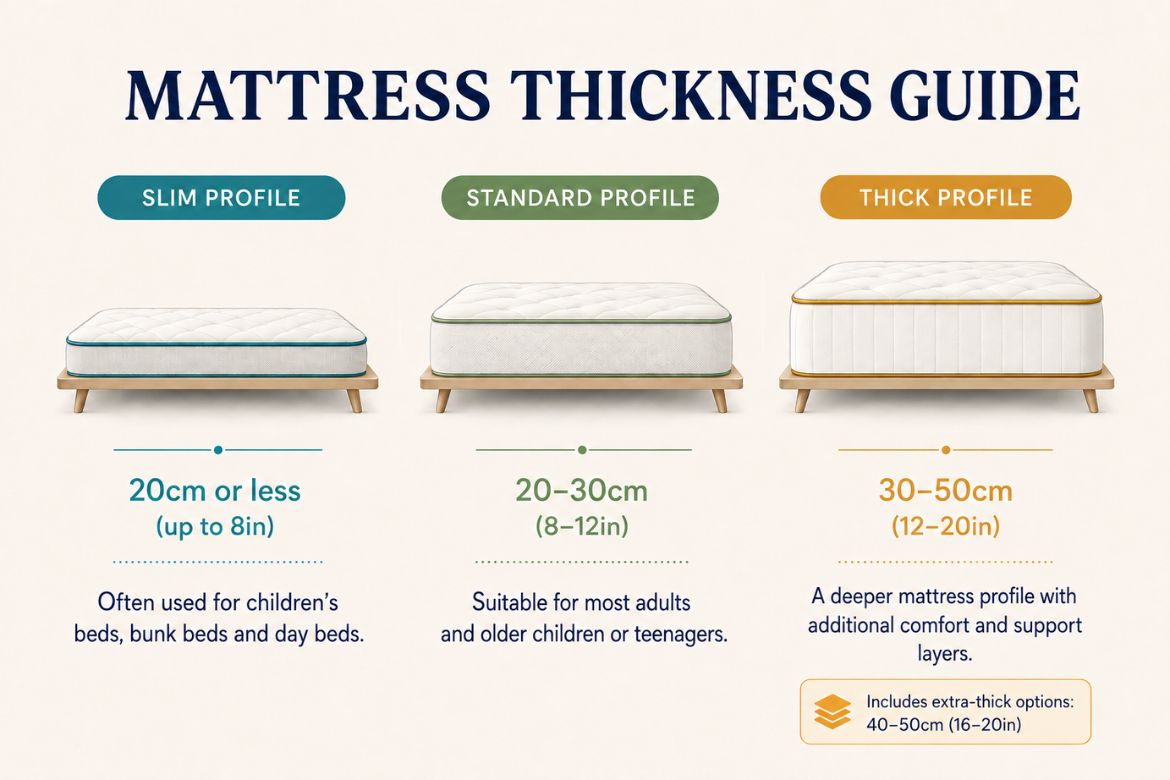
As a useful guide, Dreams gives a standard mattress depth range of 20–36cm and divides mattresses into three broad profiles:
| Mattress Profile | Depth | Guidance |
|---|---|---|
| Slim | 20cm or less | Often used for children’s beds, bunk beds and day beds |
| Standard | 20–30cm | Suitable for most adults and older children or teenagers |
| Thick | 30–50cm | A deeper mattress profile |
Mattresses between 20–30cm fall within the standard profile, although both thinner and considerably deeper mattresses are available.
There isn’t a definitive figure for the average mattress depth in the UK, so it’s better to check the depth of an individual mattress rather than assume it will match an average measurement.
For more information about mattress depths and UK mattress dimensions, see the Dreams Bed and Mattress Size Guide.
Memory Foam Mattress Thickness
If you own or are planning on buying a memory foam mattress, you may be wondering how thick it should be. Rather than one standard depth, the ideal memory foam mattress thickness can depend on your sleeping position.
As a general guide, Dreams recommends the following memory foam mattress thicknesses based on the sleeping position:
- Side sleepers: at least 22cm
- Back sleepers: 12–20cm
- Front sleepers: at least 20cm
Sufficient depth allows the memory foam to contour to the body and provide appropriate cushioning and support.

Is a Thicker Mattress Better?
A thicker mattress isn’t necessarily a better mattress. Depth is only one aspect of mattress construction, so it shouldn’t be used on its own as a measure of quality.
A deep mattress may have additional or thicker comfort layers, a substantial spring system or a pillow-top section. However, the materials, construction and suitability of the mattress are also important considerations.
How to Measure Mattress Depth?
Knowing your mattress depth is useful when buying fitted sheets, mattress protectors or a replacement mattress.
You’ll need a tape measure.
Step 1: Remove the Bedding
Take off sheets, mattress protectors and other removable bedding so you’re measuring the mattress itself.
Step 2: Make Sure the Mattress Is Level
Make sure the mattress is lying flat so you can clearly identify the bottom and highest point.
Step 3: Measure From Bottom to Top
Position the tape measure vertically against the side of the mattress and measure from the bottom edge to the highest point of the mattress.
If your mattress has an integrated pillow top, include it in the overall measurement because it forms part of the mattress.
How Mattress Depth Affects Overall Bed Height
Mattress thickness shouldn’t be considered in isolation because your bed base and mattress together determine the height of your sleeping surface.
According to Dreams, standard beds, including many divans and traditional frames, typically measure around 45–55cm from the floor to the top of the mattress. Low-profile and platform beds can sit lower, at around 30–40cm.
Adding a particularly deep mattress to a tall base could therefore make your finished bed substantially higher than expected.
Before replacing your mattress with a significantly thicker or thinner model, consider how that change will affect the overall height and proportions of your bed.
Do You Need Deep Fitted Sheets for a Thick Mattress?
Possibly. Fitted sheets are designed to accommodate mattresses up to a particular depth, so checking this measurement before buying bedding can save frustration later.
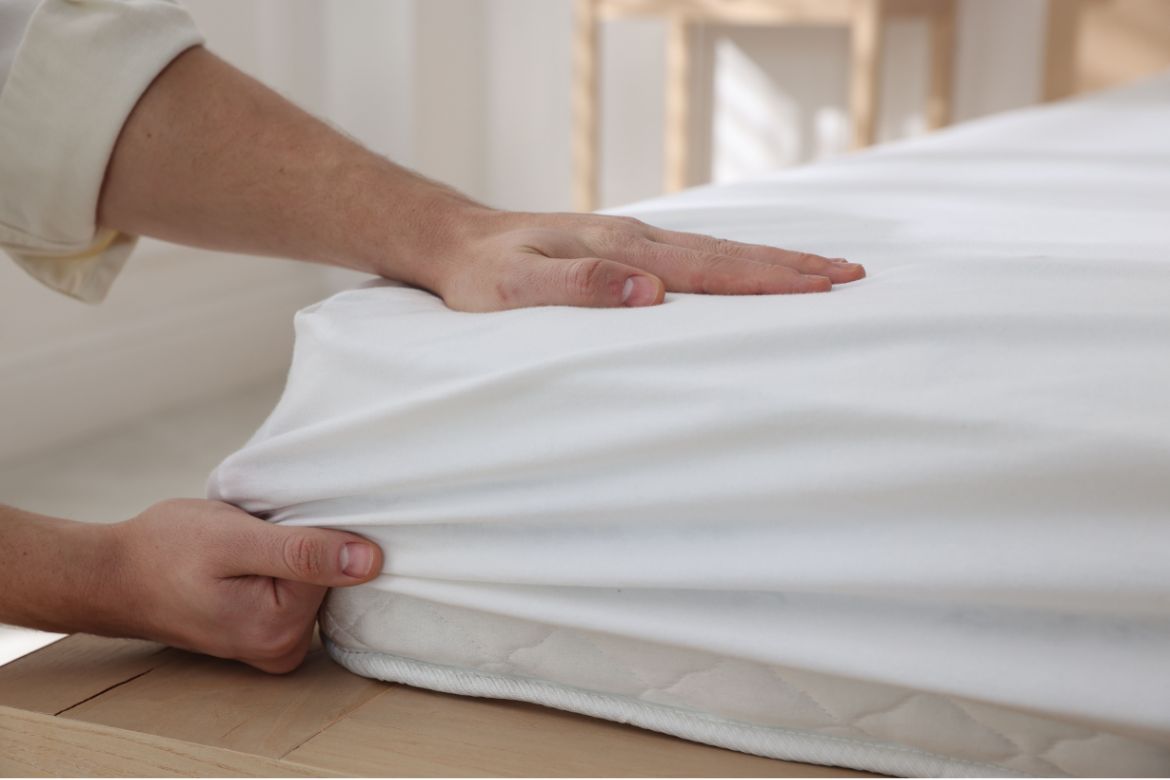
Dreams notes that mattresses outside its standard depth range may require shallower or deeper bedding to fit securely.
Measure the mattress itself and compare the result with the maximum mattress depth stated for the fitted sheet.
If you use a separate mattress topper, remember that this adds height to the complete sleep surface and may also affect how comfortably your fitted sheet fits.
Measure Your Bedroom Before Buying a New Bed
Mattress thickness is only one measurement to consider if you’re replacing both your mattress and bed.
The dimensions of a bed frame can extend beyond the mattress itself. Dreams points out that divan beds generally follow the mattress dimensions closely, whereas wooden, metal and upholstered frames can extend beyond them. Sleigh beds, substantial headboards and other design features may increase the bed’s overall footprint.
Before ordering, check the manufacturer’s complete product dimensions and measure the space where the bed will go.
For more guidance, see the Dreams Home Measuring Guide.
Final Thoughts
Mattress thickness is worth considering, but deeper doesn’t automatically mean better. The most suitable depth depends on the mattress’s construction, your bed frame, overall bed height and practical factors such as accessibility and fitted-sheet depth.
As a general guide, 20–30cm can be considered a standard-profile mattress, while slimmer and substantially deeper options are available for different beds and preferences.
The most important step is to look beyond a single measurement. Check the mattress’s full specifications, make sure it suits your bed frame and consider how its depth will affect your complete bed setup.